Case study
Penny
Penny helps people understand what they can safely spend once bills, paychecks, savings goals and upcoming obligations have been accounted for.
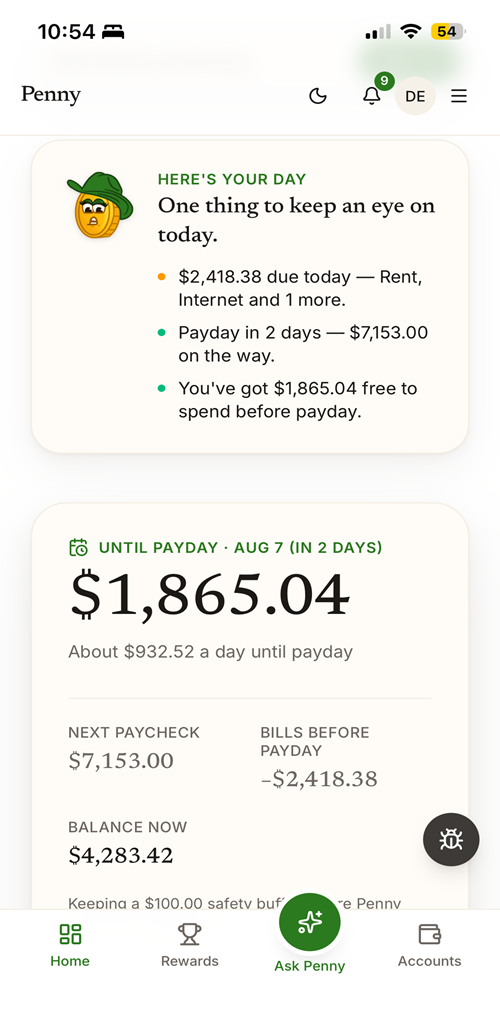
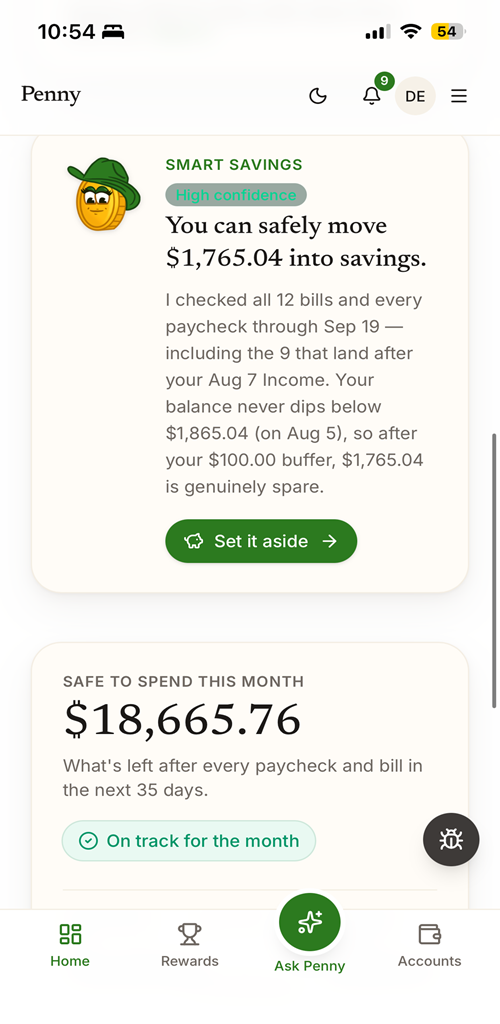
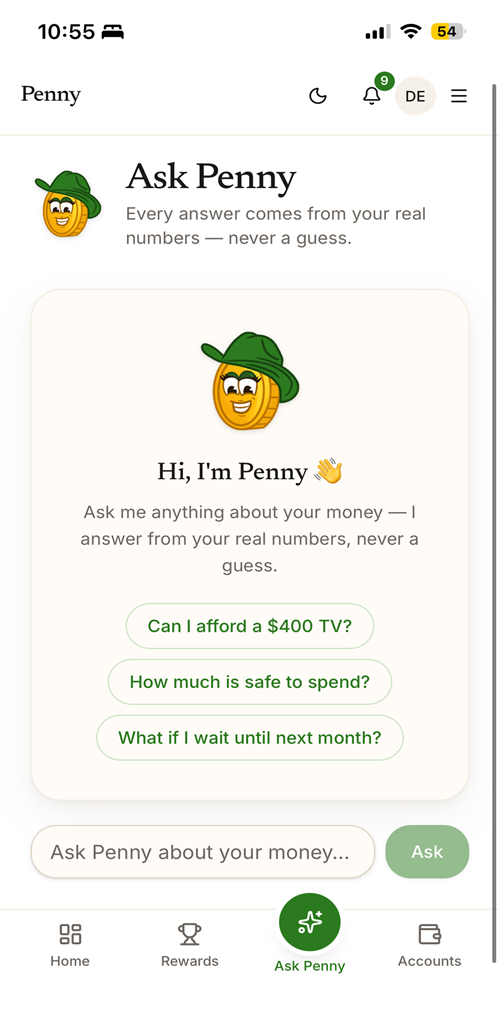
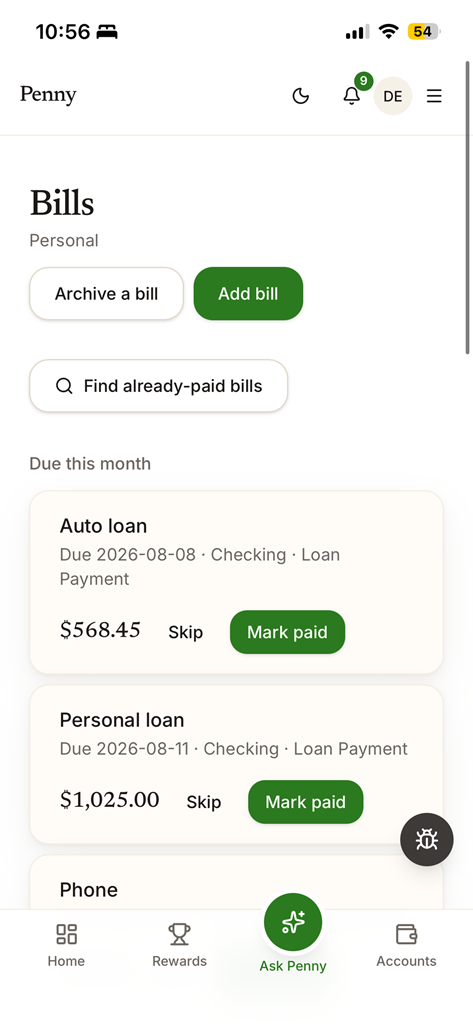
Screens show a demo account, not real finances.
The product
A balance does not tell you what you can spend.
It tells you what is in the account right now, which is a different number entirely once rent, a card payment and two subscriptions are still to land. Penny exists to answer the question people actually ask.
The product connects to a person's real accounts and works forward from them—bills and their due dates, paychecks and when they arrive, savings goals and what has been promised to them—to produce one honest figure: what is safe to spend. Everything else in the app exists to keep that figure trustworthy.
That is a harder problem than it looks. The number is only as good as the data behind it, which means live bank connections, transaction syncing that does not drift, and enough structure around recurring money to know what is a bill and what was a one-off. Get any of that wrong and the product is not slightly less useful—it is actively misleading about someone's money.
What was built
The app, and everything underneath it.
What people use
Safe to Spend
The calculation the whole product is built around: what is genuinely free to spend once every upcoming bill, paycheck and goal has been accounted for.
Bills and paychecks
Recurring money in and out, tracked with due dates, so the forecast reflects what is actually coming rather than what a balance says today.
Savings goals
Targets that draw from the same forecast, so putting money aside cannot quietly break the rest of the month.
Ask Penny
An assistant that answers questions about your own money — grounded in the account data, not general advice.
What holds it up
Bank connections via Plaid
Linking real financial accounts and keeping transactions in sync — the part of a finance product where most of the difficulty actually lives.
Accounts and security
Authentication, biometric unlock and push notifications, built for data people are right to be protective of.
Subscriptions and in-app purchases
Billing that has to survive contact with real payments, renewals and platform rules.
Backend and release
Database and backend systems, deployment, testing, and distribution through App Store review.
Why we show it
Penny is not a client project. That is the point.
Penny was designed, built and launched end to end by Slipway's founder as an independent product. No client commissioned it, and Slipway Software LLC does not own it. We show it because a finished product is better evidence than a portfolio of screens: it went through the same path we put client work through, and nothing about it stopped at a handsome mockup.
It is also the same shape of problem most client builds turn out to be. Accounts and permissions. A third-party integration that the product genuinely depends on. Subscriptions that have to bill correctly. An AI feature that has to be grounded in real data rather than decorative. Notifications, security, a backend, and then the unglamorous work of testing it and getting it through store review. Knowing where the effort actually hides in that list is most of what you are hiring.
- Live on the Apple App Store
- Android submitted to Google Play, awaiting review
Have an idea worth building?
If your product has any of this in it, it is the right conversation to have.
Start a project